
7 Best Ways to Store Pet Food and Keep It Fresh
Proper pet food storage isn't just about organization. It's essential for your pet's health and wellbeing. When pet food isn't stored correctly, it can lose nutritional value, develop harmful bacteria, attract pests, or become stale and unpalatable. Whether you have a cat or dog, understanding how to maintain food freshness ensures your furry friend receives the maximum nutrition from every serving while preventing waste and potential illness.
In this guide, you'll discover the seven most effective methods for storing pet food to maintain its freshness, safety, and nutritional integrity. From utilizing appropriate containers to monitoring expiration dates, these practical strategies will help extend the shelf life of your animal's meals and protect their health.
1. Always Store Pet Food in the Original Packaging
When you bring home a new bag of kibble or canned food, resist the urge to discard the packaging immediately. Manufacturer packaging is specifically designed to maintain freshness and block out elements that accelerate spoilage like light, air, and humidity.

The original bag contains essential information you might need later, including the lot number, and "best by" date. These details become crucial if there's ever a recall or if your companion experiences an adverse reaction to their meals. Keeping this information accessible allows you to quickly determine if your particular batch is affected during a safety alert.
Many premium food packages also feature specialized barriers and seals engineered to preserve freshness longer than generic storage options. Veterinary nutritionists often recommend keeping dry food in its original bag even when using secondary containers for added protection and convenience.
2. Use Airtight Containers, but Don't Pour Food Directly In
Airtight storage solutions provide an excellent defense against moisture, oxygen, and unwanted critters that can compromise your furry friend's nutrition. However, a common mistake many caregivers make is emptying the contents directly into these bins.
When kibble is poured directly into containers, oils and crumbs from previous batches can coat the bottom and sides, eventually becoming rancid. These residues can contaminate fresh food and accelerate spoilage. Instead, place the entire original bag inside your airtight bin for optimal freshness protection.
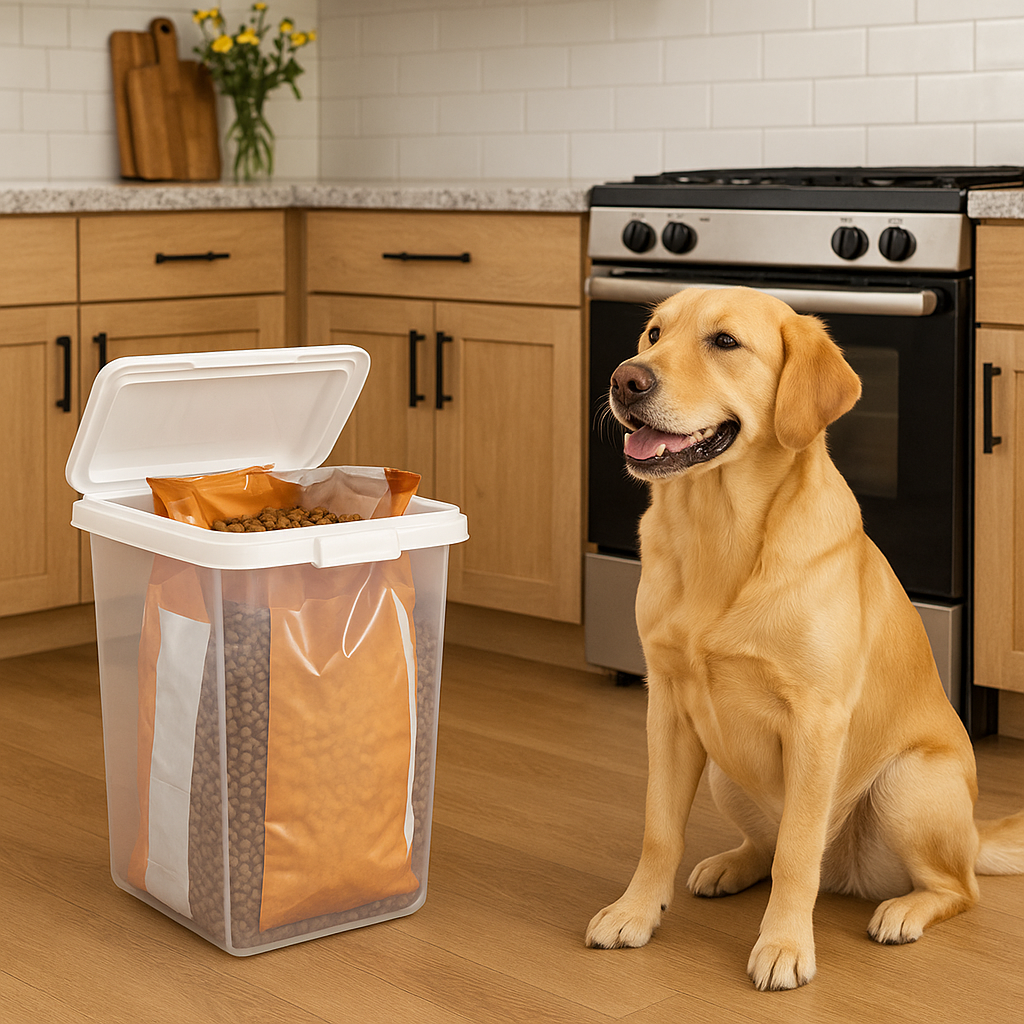
For secondary storage, consider options like BPA-free plastic, stainless steel, or glass containers with secure seals. Look for features like wheels for heavier bins, stackable designs for space efficiency, or convenient pour spouts for easier meal preparation.
3. Keep Pet Food in a Cool, Dry, and Dark Space
Environmental factors significantly impact how quickly pet food deteriorates. Exposure to heat, humidity, and direct sunlight accelerates the breakdown of essential vitamins and causes fats to become rancid, compromising both nutritional value and taste.
The ideal storage environment maintains temperatures below 80°F (26°C), with limited temperature fluctuations. Nutritionists recommend pantries, closets, or kitchen cabinets away from appliances that generate heat. Avoid storing supplies in garages or outdoor sheds where temperature and humidity levels can fluctuate dramatically with weather changes.
Moisture is particularly problematic as it creates conditions where mold and bacteria thrive. Even seemingly minor exposure to humidity can affect kibble quality, making it soft, stale, or potentially harmful. Ensuring your storage location stays consistently dry helps preserve the taste and safety of every meal you serve.
4. Properly Seal and Store Opened Cans or Wet Food
Wet food requires special attention once opened since it's particularly vulnerable to spoilage. After serving your companion's portion, the remainder should be promptly refrigerated in a sealed container to maintain safety and palatability.
Refrigerated wet food should be kept at or below 40°F (5°C) and used within 2-4 days. If you notice any unusual odor, discoloration, or texture changes, discard the food immediately rather than risking digestive upset or illness. For households with smaller pets that may not finish a full can at once, consider using pouches with smaller portions. They help keep the food fresher between servings and reduce unnecessary waste.
5. Practice Cleanliness: Wash Containers, Scoops, and Bowls Regularly
Keeping feeding equipment clean is essential for maintaining food safety and freshness. Without regular cleaning, storage bins can accumulate oils and crumbs, creating an ideal environment for bacteria and attracting insects.
Empty your storage container completely before washing it with hot, soapy water. Ensure it's thoroughly dry before refilling to prevent introducing moisture to the new supply. This cleaning should ideally happen each time you purchase a new bag rather than simply topping off the existing contents.
Food scoops and bowls require even more frequent attention. Wash feeding dishes daily with soap and water to remove residue that can harbor harmful microorganisms. Measuring scoops should be cleaned weekly or whenever they become visibly soiled. These simple hygiene practices prevent cross-contamination and ensure your companion enjoys the freshest possible meals with each serving.
6. Prevent Pest and Pet Access
Unwanted visitors, both the six-legged variety and your own furry friends, pose significant challenges to maintaining fresh supplies. Rodents and insects are attracted to the aroma of pet food and can quickly contaminate large quantities if they gain access.
Store bags and containers elevated off the floor when possible, particularly in basements or areas where pest activity might be more common.
Secure containers with heavy, tight-fitting lids that can't be easily dislodged by determined animals or knocked over by curious household members.
Even well-trained companions can be tempted by accessible food supplies. Beyond potential overeating concerns, animals accessing their own supplies can inadvertently introduce moisture and bacteria from their mouths. This becomes particularly problematic for households with pets on different diets for medical reasons, where preventing cross-feeding is essential for health management.
7. Monitor Food Freshness, Expiration Dates, and Batch Recalls
Creating a simple system for tracking freshness ensures your companion always receives optimal nutrition. When purchasing new supplies, check the "best by" date and make it a habit to use older products first to maintain a proper rotation schedule.
Learn to recognize signs of spoilage, which may include unusual odors, clumping, evidence of moisture, color changes, or the presence of mold. Fresh kibble should have a consistent appearance and a mild, characteristic smell. Anything off-putting likely indicates compromised quality.
Periodically check manufacturer websites or sign up for recall alerts to stay informed about potential safety issues with particular brands or batches. Having original packaging information readily available makes it easy to determine if your supplies are affected by any announced recalls.
Consider writing the purchase date directly on the bag or container with a permanent marker to help track how long packages have been open. This simple habit helps ensure you use supplies within recommended timeframes, generally within 4-6 weeks of opening for dry food and according to package guidelines for unopened products.
Conclusion
Proper storage techniques do more than just extend the life of your companion's food. They safeguard nutrition, prevent waste, and protect your animal's health. By keeping supplies in original packaging, using appropriate airtight containers, maintaining ideal environmental conditions, and practicing good hygiene, you'll ensure every meal serves its intended purpose.
Implementing these seven storage best practices requires minimal effort but yields significant benefits for both your pet's wellbeing and your household budget. Consider evaluating your current storage methods and making improvements where needed to provide the freshest, safest nutrition possible for your furry family member.
Frequently asked questions
Can I freeze dry pet food or canned pet food to extend its shelf life?
It's not recommended to freeze dry pet food due to potential changes in texture and taste. Canned food should not be frozen, as it may alter consistency and quality.
How long will dry food stay fresh after opening?
Dry pet food stored properly in a cool, airtight container can last 4–6 weeks after opening. Always check for changes in aroma or texture.
Is it safe to mix new and old bags of dry pet food?
Only if both are the same formula, and the older food is not expired. Mixing helps your pet transition to a new batch and prevents waste.
What's the safest way to store pet treats?
Store treats in their original packaging or an airtight container, in a cool, dry place, out of your pet's reach to prevent overeating and spoilage.